Quick answer
How does the Smart Export Guarantee pay battery owners?
The Smart Export Guarantee requires larger energy suppliers to pay you for electricity you send back to the grid from an MCS-certified installation. Rates are set by each supplier, either flat or time-of-use. As a simple rule, store energy when its value at home is higher than the export rate, and export when it is lower.
Last updated:
Published August 2026
The Smart Export Guarantee (SEG) requires larger suppliers to pay you for electricity you send back to the grid. Published SEG flat rates ran from roughly 1p to 25p per kWh in 2026, and Outgoing Octopus pays a flat 12p/kWh from 1 March 2026 (Octopus Energy).
What the SEG is
The SEG is an Ofgem-run scheme that started in January 2020. Licensed suppliers above a certain size must offer at least one export tariff, and the rate must always be above zero. Suppliers set their own rates, so they vary widely, and you do not have to take your export tariff from the same supplier as your import tariff. You need an export-capable smart meter, and solar installations generally need to be MCS-certified to qualify. We install through MCS-certified partners.
Flat-rate versus time-of-use export
A flat-rate export tariff pays the same for every kWh, whatever the time of day. A time-of-use or half-hourly export tariff pays more when the grid needs power, typically in the early evening, and less at other times. Time-of-use export suits a battery, because it can hold energy back and release it when the export price is highest. Rates change, so check current terms before planning around any figure.
Export or store? The principle
Every kWh your battery holds can do one of two jobs: replace electricity you would otherwise buy at peak, or be sold on export. Using it at home is usually worth more when your peak import price is higher than your export price, which is common. Exporting makes more sense when the battery is already full, when you are away, or when a time-of-use export rate briefly beats your import price. Good battery software makes this choice automatically each day.
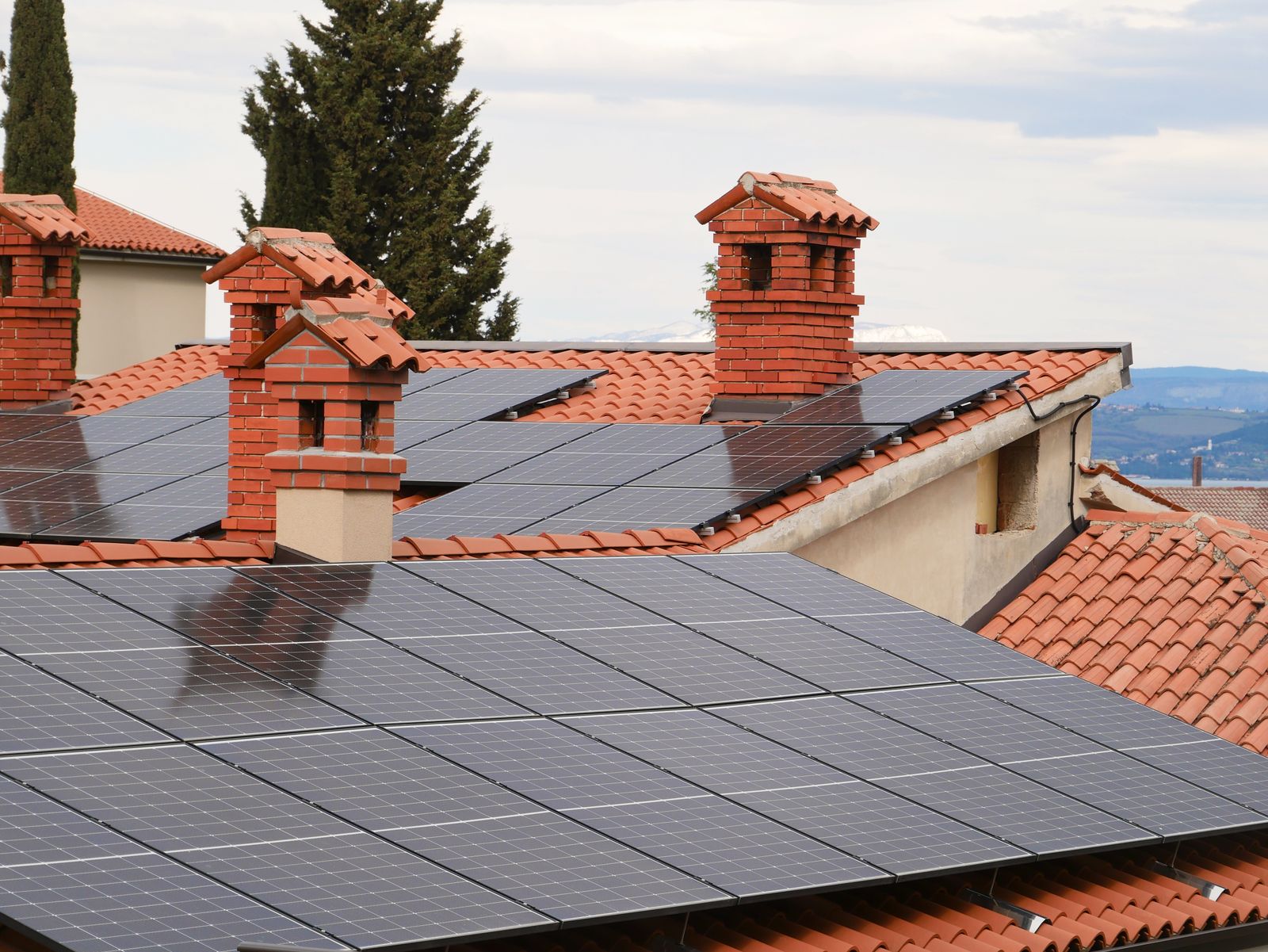
In Scotland this matters most in summer. A south-facing roof on a harled semi in Fife or a farmhouse in Aberdeenshire can produce more solar than the house uses on long June days, so the battery fills by early afternoon and the surplus is exported. In winter, solar output is low and the battery relies more on cheap overnight import. A no-obligation survey gives figures for your home.
Before you sign up for export
Check three things. First, whether the export tariff pays for energy that was charged from the grid, or only for solar generation; some tariffs exclude grid-charged export. Second, whether it requires you to take your import tariff from the same supplier. Third, whether your network operator has set an export limit on your connection, which SP Energy Networks or SSEN may do in some areas. We cover the export limit during the grid paperwork at installation.
Sources: Ofgem SEG guidance; Octopus Energy tariff notices. Checked October 2026.